
Video Measuring Machine Wholesale: Key Factors to Evaluate Before Buying in Bulk
2026-10-04
Sourcing video measuring machines in bulk isn’t just about locking in a lower unit price—it’s about ensuring every unit delivers consistent accuracy, durability, and support long after the invoice is paid. Before you commit to a large order, several critical factors demand your attention, from calibration stability to real-world after-sales service. As you compare suppliers, keep an eye on brands like JATEN, whose track record in precision measurement can help you separate genuine long-term value from costly compromises. Here’s what you need to evaluate before making a wholesale commitment that won’t come back to haunt you.
Matching Machine Capabilities to Your Actual Inspection Workload
Many teams get swayed by top speed or maximum resolution figures, then struggle when their daily parts don't match those ideal conditions. The real workload includes mixed lots, reflective surfaces, thin scratches, and occasional oversized pieces. Without mapping those specifics first, you either pay for capability you never use or discover gaps after installation.
Start by logging a typical week: how many units per shift, how often changeovers happen, which defects slip through manual checks, and how much time operators actually spend on setup. That log becomes your spec. If 80% of the work is small plastic housings with subtle dents, a fast line-scan camera and simple surface lighting might outperform a higher-resolution area camera that requires frequent repositioning. Conversely, if you inspect large castings with variable geometry, flexible multi-axis movement and robust software matter more than raw megapixels.
Then match each requirement to a machine feature you can verify in your environment, not just in a demo. Run samples that include your hardest rejects and borderline passes. Watch how the system handles ambient light, slight part shifts, and quick product swaps. The idea is to leave enough headroom for next year's parts without buying a platform that fights your current processes. A well-matched machine disappears into the workflow instead of becoming a daily bottleneck.
The Real Story Behind Repeatability Claims
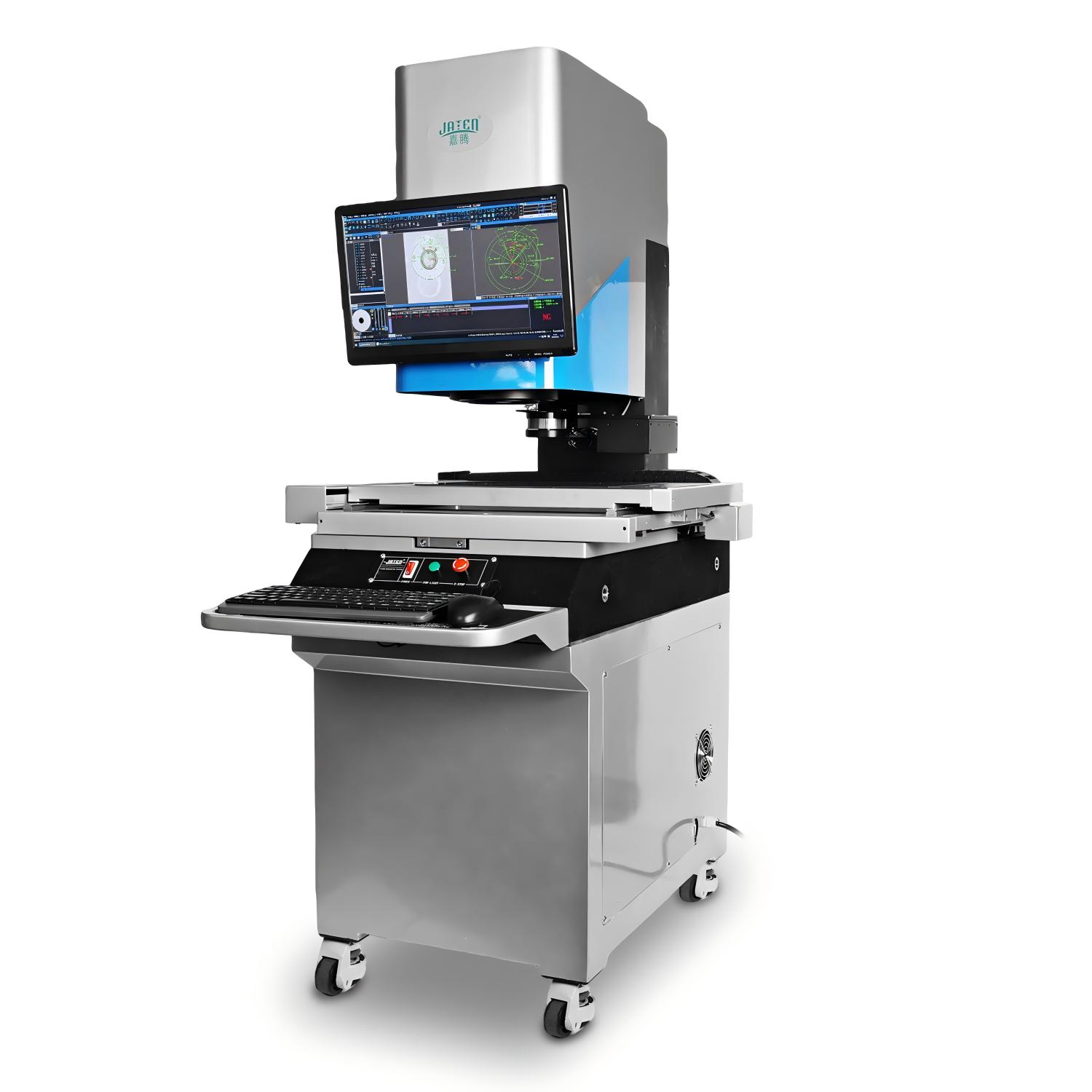
Repeatability claims often sit at the center of technical marketing, yet the numbers rarely survive contact with real-world conditions. A machine that hits ±0.005 mm on a climate-controlled test bench can drift three times that amount on a shop floor where temperature swings and vibration are the norm. What gets omitted from brochures is the setup time, the operator skill required, and the hidden assumption that the workpiece itself is stable.
The deeper issue is that most repeatability figures are single-point measurements taken under ideal circumstances, not a distribution across an entire production shift. Suppliers may quote the best of ten runs rather than the typical spread, or they may exclude warm-up cycles that consume half an hour. For anyone trying to compare equipment, the lack of a shared testing protocol means one vendor's 'repeatable' is another's 'optimistic.'
In practice, the most revealing data comes from long-term users who track drift over weeks, not hours. Those logs rarely make it into sales collateral. If a spec sheet doesn't explain the measurement conditions, the guarding of the fixture, or the number of parts tested, then the repeatability claim is closer to a wish than a warranty.
Software That Feels Familiar on Day One
Great tools don't demand you learn them from scratch. They borrow mental models you already carry — a sidebar here, a search box there, a keyboard shortcut that matches muscle memory. When the interface mirrors everyday patterns, the first hour feels less like setup and more like settling in.
This familiarity isn't accidental. It comes from studying how people actually navigate software, not how designers think they should. Buttons stay where your eyes expect them, menus reveal options in a logical order, and common tasks never hide behind layers of jargon. You click, it responds, and the workflow just flows.
The payoff is speed without strain. Teams stop translating instructions and start working. New users skip the dreaded learning curve, while experienced users discover hidden depth at their own pace. Familiarity becomes a quiet foundation, not a limitation.
After-Sale Support: The Cost You Don't See on the Invoice
When the purchase price looks reasonable, it already includes the cost of future post-sale support. Manufacturers are not charities: every customer service call, remote diagnostic session, and spare part kept in a warehouse has been priced into the product before you ever click buy. The invoice shows only hardware and shipping, but the portion of margin set aside to handle problems later is invisible.
What hides even deeper is the cost of your own time. The quality of after-sale support determines how many hours you will spend waiting on hold, re-explaining the issue, and dealing with repeat failures. A cheaper unit often comes with offshore call centers and slow return processes, while a slightly more expensive option bundles local technicians and same-day response into the price. This is not a free upgrade—it is a choice you paid for in advance.
Smart buyers treat after-sale support as a separate product, not an afterthought. Those who only compare invoice numbers are trading a visible discount for invisible risk and downtime. The next time two quotes look similar, ask yourself which one has buried the true cost of keeping the product working.
Scaling Up Without Reworking Your Workflow
Growth usually brings a familiar tension: you need to handle more work, but the thought of ripping apart the systems that already work feels risky. The good news is that scaling rarely demands a ground-up rebuild. Small, deliberate tweaks to how tasks flow, where information lives, and what gets automated can multiply capacity without forcing your team to relearn everything.
Start by spotting the repetitive steps that quietly eat time—file handoffs, status updates, invoice chasing, data entry. Instead of redesigning the whole process, add a lightweight layer that removes friction at those specific points. A shared intake form, a simple routing rule, or a weekly batch review can lift throughput while leaving the core workflow intact.
The trick is to standardize only what needs to be consistent and leave the rest flexible. Document the few decisions that trip people up, set clear ownership for each stage, and let the existing tools do more of the heavy lifting. Over time, these incremental adjustments compound, so your team scales output without the chaos of a big-bang overhaul.
Lead Times and Logistics: Planning Beyond the Purchase Order
Lead time rarely starts when the purchase order is signed. It begins with the supplier's own raw material procurement and available production slots. A furniture buyer once discovered that a quoted 35-day lead time assumed the fabric was already in stock; when the mill delayed a custom dye lot by ten days, the entire order slipped nearly a month. Mapping each stage—from sub-supplier delivery to final assembly to pre-shipment inspection—reveals hidden buffers that a PO alone never shows.
Transportation adds another layer of variability that contracts often ignore. A 28-day ocean quote from Shanghai to Los Angeles, for instance, can quietly become 40 days once terminal congestion, rail dwell at the transshipment port, and customs exam holds are factored in. Instead of relying on container line estimates, track actual dwell times at the ports you use most and build those into a rolling lead-time model. This shifts planning from a single promise date to a range of realistic arrival scenarios.
The most overlooked part is coordination after the PO is issued. Suppliers change production sequences, forwarders swap vessels, and ports announce cutoffs with little notice. A shared logistics calendar that flags exceptions—not a weekly status call—keeps everyone aligned. Pair that with a simple rule: when actual lead time exceeds the planned range by more than three days, the supplier must notify you before the delay compounds. This turns lead-time planning from a static document into a continuous, shared discipline.
FAQ
Look beyond the headline micron number. Ask for volumetric accuracy over the full measuring range, repeatability at different temperatures, and whether the stated specs are verified on every unit or just a golden sample. In a bulk order, small variations between machines can disrupt your QC data.
Request a trial batch of three to five machines first. Compare the calibration certificates and run the same part on all units. A supplier that cannot deliver consistent results on a small trial will not suddenly improve with fifty machines.
Often ignored until it is too late. If your team already uses specific inspection software or needs to export data to ERP or MES systems, make sure the machine software has clean import and export options. Mixing incompatible software across a bulk purchase can create a data headache.
Calibration, maintenance contracts, spare parts, and training. Some suppliers offer a low upfront price but charge heavily for annual recertification. Ask for a five year cost estimate per machine before committing to a bulk deal.
For bulk orders, local service matters more than a small per unit discount. If a machine goes down and you wait weeks for overseas parts or a technician, your whole production line may stall. Check the average response time and spare parts inventory in your region.
Ask about their R&D process, how they handle custom stages or lighting, and whether they can modify the machine for your specific part sizes. A trading company usually cannot explain the engineering trade offs. Also ask for existing clients in your industry and call one or two references.
Insist on a detailed bill of materials or specification sheet for every unit. Lock down the brand and model of critical components like linear scales, cameras, and lenses. Some suppliers cut corners by switching to cheaper parts after the contract is signed. A clear penalty clause for component substitution helps.
Conclusion
Before committing to a bulk purchase of video measuring machines, it pays to look past glossy spec sheets and focus on whether the equipment truly matches your day-to-day inspection demands. A machine with impressive travel and resolution may be overkill if your parts are small and tolerances modest, while a lower-cost unit can quickly become a bottleneck if it lacks the speed or stage capacity your operators need. Just as important are repeatability claims: published figures often come from ideal lab conditions, so ask for a demonstration using your own parts and multiple operators before trusting the numbers. Software is another place where hidden friction appears. If the measurement interface feels unfamiliar or requires constant menu hunting, even the best hardware will slow down your team. Prioritize systems whose software mimics workflows your inspectors already know, so the learning curve stays shallow and day-one productivity is realistic.
The real cost of a wholesale order shows up after installation. After-sale support, spare part availability, and response time for calibration or repairs can dwarf the initial invoice if the supplier is distant or unresponsive. Ask pointed questions about service contracts, onsite training, and how quickly a technician can reach your facility. Scaling up should not mean reworking your entire quality process. Look for machines that integrate with your existing data export formats, part programs, and pass/fail reporting, so adding a second or fifth unit feels like plugging into an established rhythm rather than starting over. Finally, treat lead times and logistics as part of the evaluation. Bulk orders can stall at customs or face component shortages, so confirm realistic delivery windows and buffer your production schedule accordingly. A supplier who communicates clearly about shipping and setup will save you more than a slightly lower unit price ever will.
Contact Us
Contact Person: Volien
Email: [email protected]
Tel/WhatsApp: +86 18029161762
Website: https://www.jatentech.com/