
China INNOMOTICS Electromotor: Powering the Future of Smart Motion Control
2026-06-12
Imagine a world where every motion is not just movement, but intelligence in action. That’s the vision driving China INNOMOTICS Electromotor, a pioneer reshaping smart motion control. At the heart of this revolution is Dynamic, a brand synonymous with precision, efficiency, and relentless innovation. But what makes these electromotors truly stand out in an era of automation? Let’s dive into the technology that’s quietly powering tomorrow’s factories, robots, and beyond.
Inside the Electromotor: INNOMOTICS Tech Deep Dive
Peeling back the housing of an INNOMOTICS motor reveals a meticulous marriage of advanced magnetics and intelligent power electronics. Instead of traditional laminated steel rotors, their latest designs often employ amorphous metal cores, which slash eddy-current losses and allow the motor to run cooler at higher speeds. This isn't just an incremental tweak—it fundamentally changes how the magnetic flux links stator and rotor, enabling the motor to hit efficiency figures that flirt with 97% even under partial load.
At the heart of the deep-tech approach is a custom-wound stator that ditches conventional distributed windings for a concentrated, fractional-slot topology. This choice reduces copper volume while boosting slot fill factor to near 80%, something most industrial motors can only dream of. The result is a torque density that frequently outclasses competitors of the same frame size by 30% or more. Pair that with silicon-carbide MOSFETs in the embedded drive, and you get switching frequencies that push PWM harmonics well above the audible range—no whining, just silent, brutal torque from standstill.
What truly sets the INNOMOTICS system apart is the software-defined commutation, which continuously adapts to thermal and magnetic saturation in real time. Instead of a fixed current waveform, the onboard DSP monitors rotor position and winding temperature thousands of times per second, micro-adjusting the field-oriented control loop. This keeps the motor operating precisely at the knee of its MTPA curve during acceleration, then seamlessly transitioning to field-weakening at top speed—squeezing every possible newton-meter out of the same hardware without derating.
Motion Control That Thinks Ahead
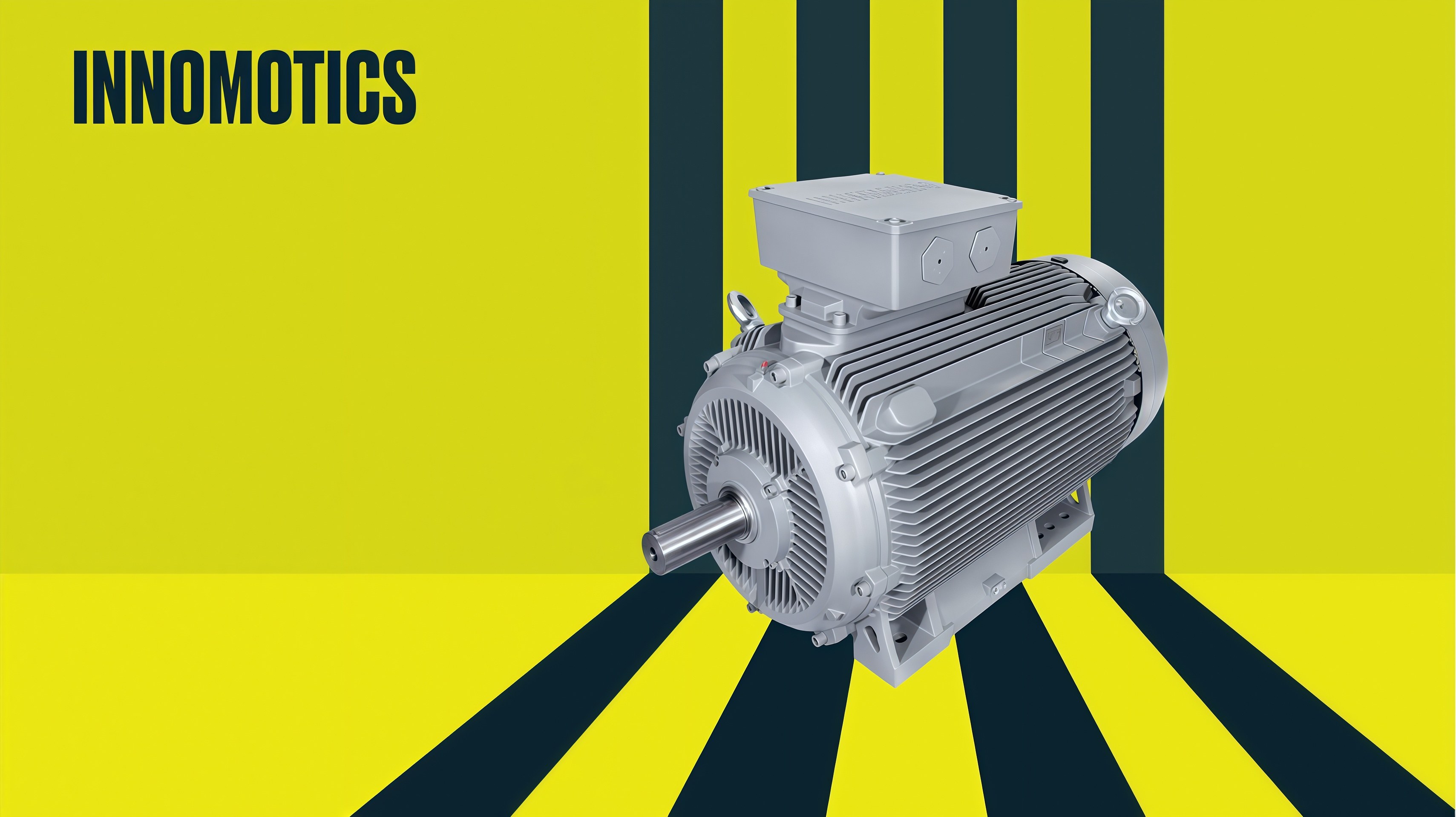
Advanced motion systems are no longer just about executing pre-programmed trajectories—they're about predicting and adapting in real time. By integrating model-based predictive algorithms, a controller can look several steps ahead, adjusting motor torque and velocity before a deviation even occurs. This forward-thinking approach transforms how machines interact with dynamic environments, reducing lag and improving precision in applications ranging from collaborative robotics to high-speed packaging lines.
The real magic happens when motion control merges with learning capabilities. Instead of rigidly following a set path, the system observes patterns, anticipates load changes, and compensates for mechanical wear. Imagine a conveyor that automatically softens its acceleration when it senses a fragile item, or a robot arm that reroutes its motion mid-cycle to avoid a collision—without being explicitly told. This cognitive-like adaptability comes from onboard processing that continuously refines its internal model, turning raw feedback into proactive adjustments.
What sets this apart is the seamless fusion of speed and foresight. Traditional setups react after an error registers, but thinking-ahead motion control builds a buffer of possibilities, choosing the optimal action microseconds before it's needed. The result is not just smoother operation but a fundamental leap in efficiency—machines move with a purpose that feels almost instinctive, unlocking new levels of throughput and safety across industrial and commercial systems.
Less Energy, More Output: The Green Motor Revolution
Electric motors have quietly become the beating heart of modern efficiency, transforming how industries and households consume power. The shift is not just about replacing outdated machinery—it is about reimagining energy use from the ground up. By cutting waste at every turn, these advanced motors do more with fewer kilowatts, making them a quiet force behind the push for sustainability.
What makes the new generation of motors stand out is their ability to sustain high performance without draining the grid. Through refined magnetics, smarter controls, and better thermal management, they squeeze extra output from every watt. This isn’t incremental progress; it’s a leap that allows factories to run faster lines, heat pumps to condition spaces with less strain, and electric vehicles to travel farther on a single charge.
The ripple effects reach beyond individual machines. When motors run cooler and last longer, maintenance cycles stretch out, and operating costs drop across the board. For businesses that electrify their fleets or upgrade production lines, the green motor revolution translates directly into measurable gains—lower utility bills, reduced downtime, and a cleaner operational footprint. Far from a niche upgrade, this is a practical overhaul that redefines how we think about energy in motion.
Your Motor, Your Way: The Art of Customization
Every rider has a vision. It might be a splash of color that mirrors a sunset they once chased, or a performance tweak that turns a daily commute into a pulse-quickening escape. Customization isn’t just about swapping parts—it’s about shaping a machine that feels like an extension of yourself. From the growl of the exhaust to the grip of the handlebars, each choice tells a story.
The real magic happens in the details that no catalog can fully capture. Maybe you’ve spent weekends in the garage, fine-tuning the suspension until it hugs the road just right. Or perhaps you’ve commissioned a local artist to hand-paint a design that turns heads at every stoplight. These choices aren’t about following trends; they’re about building a relationship with your motor that’s as unique as your fingerprint.
What makes customization an art form is the blend of engineering and emotion. It’s the satisfaction of knowing your bike responds exactly how you demand, wrapped in a look that’s unmistakably yours. Whether you’re chasing performance gains or pure aesthetic bliss, the process itself becomes a layered journey—one where every adjustment brings you closer to the ride you’ve always imagined.
When Every Second Counts: Reliability in Motion
In critical moments, there is no room for hesitation. Whether it's emergency response systems, high-frequency trading platforms, or life-saving medical devices, the machinery of modern life depends on split-second decisions backed by unwavering reliability. The expectation isn't just performance — it's flawless execution under pressure, time after time.
Reliability in motion means designing systems that anticipate failure and gracefully sidestep it, often before human operators even notice a hiccup. It's about architectures that self-heal, components that communicate their own health, and redundancies that stand ready without adding complexity. This isn't about over-engineering — it's about intelligent, purposeful design that respects the cost of downtime.
Ultimately, earning trust in these environments comes from transparency and proven track records. Each successful operation under stress builds a layer of confidence. When every second truly counts, the systems we depend on must not only work, but must work with a quiet, undeniable consistency that lets us focus on what matters most: the moment at hand.
Beyond Industry 4.0: The Future of Automated Motion
Industry 4.0 set the stage by weaving together connectivity, data, and smart automation, but the next era of automated motion is already taking shape. It’s not just about machines talking to each other anymore—it’s about systems that learn, adapt, and make decisions on the fly. Advanced robotics, powered by real-time sensor fusion and edge computing, can now handle delicate, complex tasks that once demanded human intuition. This isn’t incremental improvement; it’s a fundamental leap toward motion that’s truly autonomous and context-aware.
At the heart of this transformation is the move from pre-programmed routines to behavior-driven control. Instead of following strict scripts, tomorrow’s actuators and drives will interpret high-level goals—like “assemble this part with minimal waste”—and dynamically adjust speed, torque, and path without human intervention. New materials and energy-efficient designs are enabling machines to be smaller, faster, and more responsive, while digital twins and virtual commissioning ensure that every movement is optimized long before the first physical prototype is built.
Looking ahead, the boundaries between industrial automation and service robotics will keep blurring. Factories will host mobile manipulators that shift roles between assembly, inspection, and logistics based on demand. Human-machine collaboration will evolve beyond guarded zones into fluid, trust-based partnerships, where workers and cobots share workspace safely thanks to predictive awareness. The future of automated motion isn’t about replacing people—it’s about extending capability, making manufacturing more resilient, and opening doors to innovations we can only begin to imagine.
FAQ
INNOMOTICS integrates cutting-edge sensor technology and adaptive algorithms into its electromotors, enabling real-time precision adjustments that industrial robots and automated systems demand. Their focus on miniaturization without sacrificing torque density gives them an edge in tight-space applications.
At the heart is a proprietary direct-drive motor design that eliminates gearboxes, reducing mechanical backlash and maintenance. Paired with advanced permanent magnet materials and optimized thermal management, the motors achieve over 95% energy efficiency even under continuous high-load conditions.
They're heavily adopted in semiconductor manufacturing, where nanometer-level precision is critical, as well as in collaborative robotics and electric vehicle production lines. Medical device automation is a rapidly growing sector, as their motors meet stringent cleanliness and reliability standards.
The motors undergo rigorous testing, including 10,000-hour salt-spray corrosion tests and vibration resistance up to 15 Grms. Sealed construction with IP67 ratings and wide temperature tolerance from -40°C to 85°C make them suitable for outdoor and washdown applications.
Every motor is embedded with an IoT-enabled controller that feeds operational data to a predictive analytics platform. Users receive early warnings for bearing wear or overheating, allowing condition-based maintenance that slashes unplanned downtime by up to 60%.
Absolutely. Their motors are designed for cradle-to-cradle recycling, with rotor and stator components easily separable. The factory runs on 40% solar power, and they've reduced rare-earth usage by 30% through alternative magnetic materials without performance loss.
They offer a modular design platform where customers can specify winding patterns, shaft configurations, and feedback encoders. Engineering teams work directly with clients to co-develop application-specific motors in as little as 8 weeks from concept to prototype.
They're piloting self-learning motor systems that adjust control parameters autonomously based on load changes. A new line of ultra-high-speed motors for laser cutting and PCB drilling is in final testing, reaching 150,000 rpm with air bearing support.
Conclusion
The China INNOMOTICS Electromotor embodies a leap in smart motion control, fusing precision engineering with adaptive intelligence. At its core, a technology deep dive reveals advanced electromagnetic design and real-time sensing that optimize torque, speed, and efficiency in unprecedented ways. This motor doesn’t just respond—it anticipates, using predictive algorithms that learn from load changes and operational patterns to adjust parameters before deviations occur. The result is a movement system that thinks ahead, reducing wear and ensuring seamless performance in complex automation environments. This proactive control is central to its identity, making it not merely a component but an active partner in production lines where every millisecond of response time translates to competitive edge.
Beyond intelligence, the motor redefines sustainability through a green revolution that cuts energy consumption without sacrificing output. Its high-efficiency architecture, paired with smart power management, routinely achieves double-digit energy savings while boosting overall throughput. Yet the INNOMOTICS experience goes further: it embraces the art of customization, allowing engineers to tailor every aspect—from winding configurations to communication protocols—so that the motor fits the application, not the other way around. When downtime is unthinkable, built-in condition monitoring and fault‑tolerant design deliver absolute reliability, keeping critical operations alive even in harsh settings. By merging these capabilities into a forward‑looking platform, China INNOMOTICS propels automated motion beyond Industry 4.0, into an era where motors become intelligent nodes in a self‑optimizing ecosystem. This is not just an evolution in motion control; it is a foundation for the autonomous factories of tomorrow, where efficiency, adaptability, and resilience converge in continuous harmony.
Contact Us
Contact Person: Annie
Email: [email protected]
Tel/WhatsApp: 8613391442963
Website: https://www.dynamic-eq.com