
China Angle Steel Towers Dealers: Your Trusted Partners for Quality Infrastructure
2026-06-30
When it comes to reliable infrastructure, choosing the right angle steel tower dealer can make all the difference. From telecom to power transmission, these structures demand precision and durability. That’s where Anbang stands out—bringing years of expertise and a commitment to quality that ensures your project's success. Read on to discover how partnering with the right supplier can streamline your build and why Anbang is the name you can trust.
Why Angle Steel Towers Remain the Backbone of Modern Infrastructure
Angle steel towers have quietly underpinned our grids and networks for decades, yet their dominance isn't just a matter of tradition. The real magic lies in how their lattice structure distributes stress so efficiently that a tower can withstand hurricanes and ice loads using remarkably little material. Unlike solid pole designs, each steel angle acts as a leaf spring, flexing with the wind rather than fighting it, which dramatically reduces fatigue cracking over time. This inherent resilience, combined with a modular construction that allows repairs without taking the whole tower offline, makes them irreplaceable in regions where reliability is non-negotiable.
Beyond pure mechanics, there's an economic logic that keeps angle steel ahead. Their bolt-together nature means they can be shipped in compact bundles to the most remote mountain ridges or dense urban switchyards, then assembled with basic tools and small crews—no specialized welding or heavy cranes required. This logistical advantage sidesteps the roadblocks that often delay tubular steel or concrete installations, trimming project timelines by weeks. Moreover, the wide availability of standardized angles from multiple mills prevents the supply bottlenecks and price spikes that have recently haunted monopole projects.
What's often overlooked is how well these towers adapt to modern demands without fanfare. Existing structures effortlessly accommodate add-on equipment—antennas, sensors, even small wind turbines—simply by clamping to the lattice, turning legacy assets into multipurpose platforms. In an era of rapid tech turnover, this flexibility future-proofs investments in a way rigid alternatives cannot match. Meanwhile, hot-dip galvanizing silently fights corrosion for half a century, slashing long-term maintenance budgets and dodging the painting cycles that inflate lifetime costs for steel pole installations.
Inside China’s Steel Tower Craftsmanship: Precision That Powers Connectivity
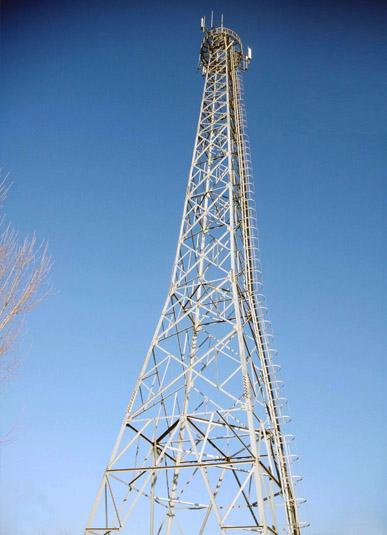
China's steel tower manufacturing has reached a level of precision that underpins global communication networks. Every tower, from the latticed structures dotting remote landscapes to the sleek monopoles in urban centers, is engineered with exacting tolerances. The fabrication process integrates advanced CNC machinery and experienced craftsmen who ensure that each bolt hole aligns perfectly and each weld meets rigorous structural standards. This obsessive attention to detail isn't just about aesthetics; it's what guarantees these towers can withstand harsh environments—typhoons, earthquakes, and extreme temperatures—while maintaining signal integrity for billions of connections daily.
Behind this output is a deep-rooted culture of craftsmanship that blends traditional metalworking expertise with modern automation. Workers undergo years of training to master the subtleties of steel behavior, learning to anticipate how materials will react under stress. Prototyping and full-scale testing are standard, with towers frequently assembled on-site before final shipment to confirm every joint and brace functions as designed. This commitment to precision directly translates to reliability in the field: fewer maintenance shutdowns, longer service life, and the seamless connectivity that powers everything from mobile payments to telemedicine. It's this unseen precision that truly connects the world.
Beyond Standard Specs: How We Adapt Tower Designs to Your Project
Every site tells a different story. Standard tower specs often fall short when faced with unique terrain, wind patterns, or load requirements that simply weren’t in the manual. We start by listening—not just to the numbers, but to the landscape itself. Our team spends time on your site, observing how the morning sun hits the proposed spot, how the prevailing winds carve through the valley, and even how the soil responds after a heavy rain. This on-the-ground insight lets us move past cookie-cutter designs and shape a structure that truly belongs where it stands.
We don’t just tweak a few parameters and call it customization. From foundation to tip, every element of the tower is open to reimagining. Maybe your project needs a narrower footprint to avoid disturbing a tree root network, or a specific steel alloy to withstand coastal corrosion. Perhaps the load calculations demand a hybrid design that blends lattice and monopole strengths. We see these challenges as puzzles worth solving, not obstacles to avoid. Our engineers work directly with your project team, iterating until the design isn’t just compliant, but naturally aligned with the actual conditions your tower will face for decades.
The result goes beyond meeting codes. It’s a tower that installs faster because the components were prefabricated for your exact slope and access constraints. It maintains signal clarity where standard models would lose coherence due to unexpected resonance. And it ages gracefully, with maintenance schedules tailored to the microclimate rather than a generic calendar. When you look up at the finished structure, you won’t see a catalog product—you’ll see your project’s identity, engineered into steel and concrete.
The Unseen Advantage: Sourcing from Dealers Who Know the Terrain
When you source from dealers who truly understand the terrain they operate in, you gain more than just a transactional relationship. These dealers bring a nuanced awareness of local conditions—weather patterns that affect logistics, road conditions that influence delivery times, and even regional regulatory quirks. This embedded knowledge often means the difference between a shipment that arrives exactly when needed and one that gets bogged down by unforeseen hurdles. It's the kind of advantage that doesn't show up in a catalog or a price quote, but becomes clear when operations run smoothly against all odds.
A dealer familiar with the terrain can also anticipate how products will perform in specific environments. They might recommend a different grade of material that holds up better under high humidity, or suggest a packaging change to prevent damage on rough roads. These insights come from years of boots-on-the-ground experience, not from a generic sales script. For businesses, this translates into fewer costly returns, less downtime, and a supplier that actually acts like a partner rather than just a vendor. The real value isn't just in the parts you buy—it's in the problems you avoid.
Ultimately, the unseen advantage of terrain-savvy dealers lies in the trust and efficiency they build over time. When you know your supplier can navigate local challenges without constant oversight, you free up your own team to focus on growth and innovation. This kind of relationship doesn't happen overnight; it's earned through consistent, reliable delivery in the face of real-world complexities. And in industries where margins are tight and surprises are expensive, that edge is worth its weight in gold.
Bridging Continents: Seamless Logistics for Global Project Timelines
Coordinating a project that spans multiple continents involves more than just aligning time zones. Every piece of equipment, every shipment, and every supplier must move in concert, often across oceans and borders. The difference between a timeline that holds and one that fractures is usually found in the quiet efficiency of logistics planning—where customs clearance doesn't become a news item, and transit delays are anticipated before they happen.
What does it take to connect construction sites in Asia, Europe, and the Americas without a hitch? It's less about speed and more about synchronization. The right partner doesn't just track containers; they weave air, sea, and ground transport into a single, responsive system. When a critical component leaves a factory in one hemisphere, its arrival at a destination thousands of miles away should feel inevitable, not miraculous.
Ultimately, the success of a global project timeline hinges on the ability to make geography feel incidental. It's about turning logistical complexity into a background hum, so project managers can focus on execution rather than firefighting. When the supply chain breathes in tandem with the project schedule, continents stop feeling like barriers and start working like connected rooms of a single operation.
Quality That Withstands Time and Climate: Stories from the Field
On a windswept coastal cliff, a century-old lighthouse still blinks through salt spray and gales. Its Fresnel lens, handcrafted in an era when precision meant survival, has never faltered. The brass fittings, thick with verdigris, keep the mechanism turning without complaint. Local mariners say the light’s rhythm feels inevitable—a quiet triumph of human intent over the ocean’s appetite for ruin.
Inland, a timber-framed barn slumbers through decades of freeze and thaw. Built by settlers who understood that angled joints and heartwood resist rot better than any modern sealant, its beams are dark as dried blood and just as stubborn. You can still see the adze marks where someone shaped the beams, trusting that winter would test their work and find it worthy. Every spring, the wood groans a little, adjusting, but never breaking.
Further south, desert watchtowers made from adobe stand mute under a bleaching sun. Their walls, mixed with straw and prayers by hands long gone, have held the shape of shelter for four hundred summers. When rare storms roll in, the bricks bleed tiny rivulets of clay, then harden again into a crust that feels almost alive. Archaeologists call it sacrificial erosion: the building gives a little to keep its core intact, a lesson in designing for permanence through quiet concession.
FAQ
Their lattice structure offers excellent stability and wind resistance, making them suitable for tall structures like power transmission towers. The use of angle steel also facilitates on-site assembly without heavy machinery.
Reputable dealers implement rigorous inspection protocols, from raw material sourcing to final galvanization. Many hold ISO certifications and conduct load tests to verify structural integrity.
Most dealers offer tailored solutions, adjusting height, cross-arm configurations, and bolt patterns to match project needs. Clients typically provide design loads and site conditions for accurate customization.
They are primarily used in electrical power transmission, telecommunications, and railway electrification. Some designs also serve as wind monitoring masts or lighting structures.
Dealers coordinate container loading or bulk shipping depending on tower size. Components are bundled and labeled for easy reassembly, and tracking information is shared throughout transit.
A reliable dealer provides installation guides, technical drawings, and remote assistance if needed. Some also offer on-site supervision for large-scale projects.
Yes, established manufacturers design towers according to IEC, ASTM, or equivalent national standards, and they often have in-house labs for chemical and mechanical testing.
Lead times vary, but many dealers maintain stock of standard components. For rush orders, they can ramp up production lines and prioritize shipments to meet critical deadlines.
Conclusion
Angle steel towers form the silent skeleton of global connectivity. From cellular networks threading through mountain passes to power lines spanning desert expanses, their structural integrity remains non-negotiable. This is where China's specialized dealers step in—not merely as suppliers, but as engineering partners who translate decades of precision manufacturing into tailored solutions. The craftsmanship embedded in every tower reflects a lineage of metallurgical expertise: hot-dip galvanization that laughs at salt spray, bolt-hole alignment measured to micron tolerances, and adaptive design capabilities that reshape standard specifications to match real-world terrain, wind loads, and local regulatory quirks. Working with dealers who understand the land beneath the tower—whether it's Andean highlands or Southeast Asian wetlands—means your project inherits institutional knowledge that prevents costly mid-installation surprises.
That localized insight extends into logistics orchestration that few global traders can match. When 40-meter sections need to cross three borders and arrive before monsoon season swells rivers, Chinese dealers leverage shipping routes and on-ground partnerships built over years of continental bridging. The true test, though, unfolds decades later, when towers stand rust-free through decades of typhoons and thermal swings—field proof that rigorous quality protocols aren't marketing fluff. From initial load analysis to the final bolt torques witnessed by local crews, these dealers have earned the trust of infrastructure builders worldwide by delivering consistency that outlasts contractual obligations. In an industry where shortcuts crack under time, China's angle steel tower dealers remain the go-to partners for those who build to last.
Contact Us
Contact Person: antor khan
Email: [email protected]
Tel/WhatsApp: 8613863903569
Website: https://www.qdabtower.com/