
Best Tact Switch Supplier: Finding Quality Components for Your Next Project
2026-06-10
When designing your next electronics project, the choice of tact switch supplier can make or break the user experience. A reliable, high-performance tact switch ensures crisp feedback and long-term durability—qualities that define KEJIAN ELECTRONICS. As a leading manufacturer committed to quality, they offer a diverse range of tact switches tailored for everything from consumer gadgets to industrial equipment. Whether you're prototyping a new device or scaling up production, partnering with the right supplier is crucial. In this post, we’ll explore what sets top suppliers apart and how to select components that elevate your design.
Evaluating Supplier Reliability Beyond Promotional Claims
Genuine reliability rarely shouts from a glossy brochure. It reveals itself in the quiet consistency of a supplier's behavior when no one is watching—like how they handle a raw material shortage or a sudden quality dip. Instead of being swayed by polished guarantees, look at their track record during disruptions. Have they proactively communicated delays? Did they offer viable alternatives without being prompted? These unrehearsed moments paint a far more accurate picture than any scripted sales pitch.
Numbers and certificates only tell part of the story. A supplier might boast ISO credentials, yet their factory floor could tell a different tale of haphazard processes and last-minute fixes. To cut through the formalities, initiate unannounced visits or request video walkthroughs that show actual production—not staged tours. Pay attention to how they treat their own workforce; high turnover or disengaged staff often leaks into product consistency. Cultural cues matter too: a supplier who genuinely invests in skills development or equipment maintenance is signaling long-term stability, not just chasing the next order.
Over-reliance on promotional assurances can blind you to subtle warning signs. Map out a supplier's dependencies: do they heavily rely on a single raw material source, or are their logistics prone to geopolitical choke-points? A truly reliable partner will openly discuss these vulnerabilities and share their contingency plans without defensiveness. Also, monitor how they behave after a contract is signed. Does responsiveness taper off? A drop in communication frequency or a shift from proactive problem-solving to bare-minimum compliance often suggests that their customer‑centric promises were merely transactional from the start.
Matching Tact Switch Specifications to Real-World Demands
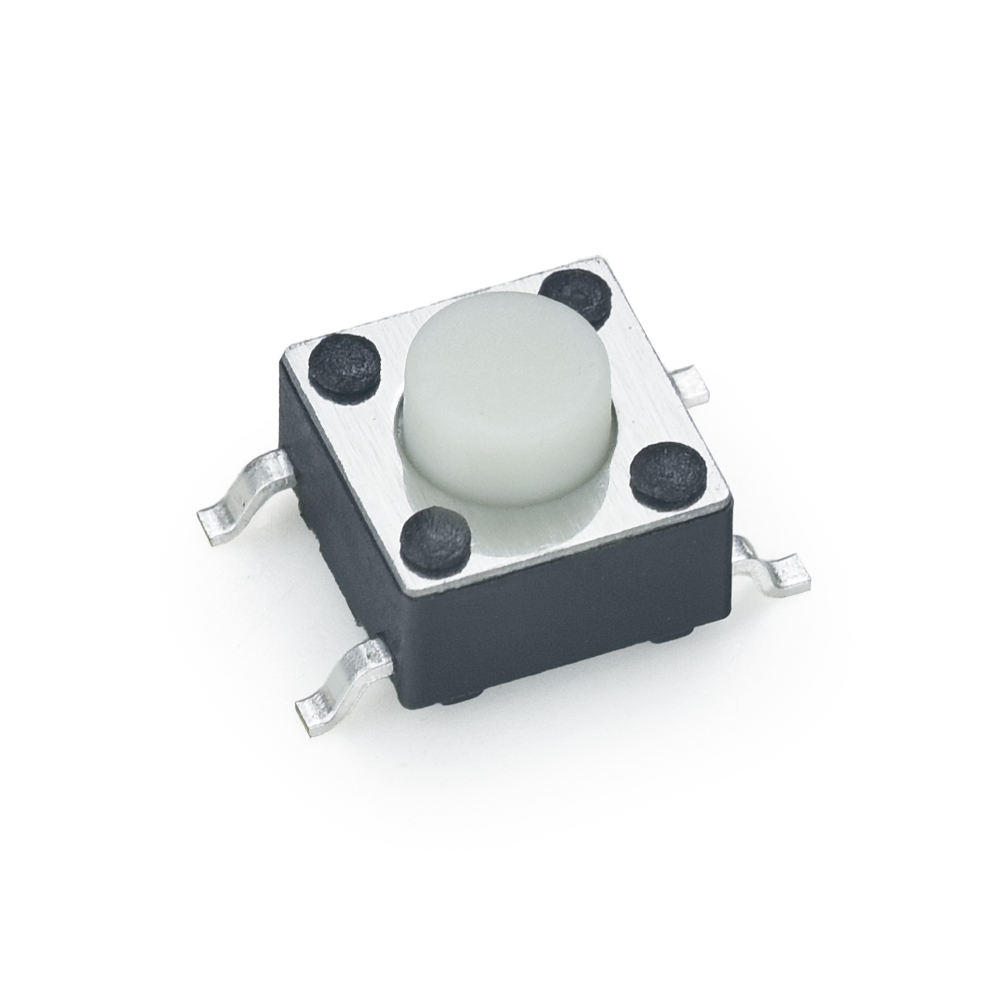
The first step in aligning a tact switch with a practical application is to look beyond the datasheet’s headline numbers. Operating force, often listed as a single value, actually varies across production batches and environmental conditions. A switch rated at 160gf might feel perfect in a laboratory but become frustratingly stiff in a cold warehouse, or too mushy under sustained use. It’s essential to consider the tactile ratio—the snap-back force relative to actuation force—because this largely defines the user’s perception of crispness. Engineers who skip real-world sampling under varied temperatures and humidity levels often find their products returned for poor ergonomics, not electrical failure.
Life-cycle ratings can also be misleading if accepted at face value. A million-cycle spec sounds impressive, but it’s only meaningful when you know the failure criteria: does the test stop at a 30% contact resistance shift, or when the button stops clicking entirely? In high-vibration environments like industrial controls or vehicle dashboards, even tiny electrical noise from a tired switch can trigger false actuations. Pairing a switch’s bounce characteristics with the right debounce algorithm or hardware filtering often matters more than the raw cycle count. Devices that rest in standby for years need switches with minimal off-state leakage, a detail seldom highlighted in glossy catalogs.
Finally, the physical interface between the switch and the user can make or break a design. A capsense overlay hiding a micro-switch requires precise alignment of the actuator height and keycap travel, otherwise the entire haptic promise collapses. SMT switches soldered onto dense PCBs must cope with board flex without cracking their internal domes. In outdoor gear, ultrasonic welding of a membrane panel means the switch underneath has to survive peak reflow temperatures without losing its tactile edge. Mapping these layered demands early prevents the all-too-common scenario where a perfectly specified component becomes the weakest link in the user experience.
Material and Manufacturing Secrets That Impact Longevity
In any product built to endure, the quiet hero is often the material itself. High-purity stainless steels, titanium alloys, or even custom-engineered polymers don’t just happen to survive harsh conditions—they’re chosen because their grain structures resist fatigue, their thermal expansion rates remain predictable, and their surfaces shrug off corrosive attacks that would turn cheaper alternatives into Swiss cheese. Take marine hardware: the difference between a fitting that crumbles after one season and one that looks new a decade later isn’t magic. It’s usually a deliberate move to a duplex stainless steel or a bronze alloy with a tightly controlled tin content, materials that form a self-healing patina instead of rusting through.
But even the most impressive material is just a starting block. How it’s shaped and treated can make or break the longevity promise. Machining to tolerances that prevent micro-vibrations, cryogenic tempering that realigns molecular stress, or plasma nitriding that armor‑plates a surface without adding bulk—these processes aren’t marketing fluff. They’re the difference between a gear that strips under sudden load and one that hums along for millions of cycles. Shot peening, for instance, bombards a metal part with tiny spheres to squeeze its skin into a compressive layer that actively resists cracking. Skip that step, and fatigue failures become a waiting game.
Where things get truly interesting is when material science and process mastery fuse into a proprietary recipe. The best manufacturers don’t just follow industry standards; they develop in‑house heat‑treat sequences, forge under inert atmospheres to avoid oxide inclusions, or use laser‑clad coatings that chemically bond rather than mechanically stick. These hidden choices aren’t listed on a spec sheet, but they define whether a component fades gracefully or fails catastrophically. Next time you’re holding a tool that has outlasted every expectation, know that somewhere behind it is a stubborn engineer who insisted on a specific alloy lot and a thermal cycle that takes three times longer than the textbook says—because that’s where durability is born.
Customization Options That Go Beyond Standard Catalogs
When off-the-shelf solutions feel like a straitjacket, we tear up the playbook and start fresh. Our team digs into the way your business actually works—those quirky workflows, niche requirements, and unspoken needs that generic providers ignore. From tweaking hardware specs to reimagining entire product architectures, the result is something that fits like it was grown, not manufactured.
Color, material, label placement? That’s just the surface. We’ve helped a boutique hotel chain embed custom scent diffusers into room controls, and a medical device startup reengineer a sensor housing to survive repeated autoclave cycles. It’s about understanding why a feature matters to your user—and then building it until it feels inevitable.
The real difference shows up when your competitors are still scrolling through a PDF catalog, and you’re already holding a prototype that addresses a pain point your customers hadn’t even named yet. No lead times inflated by overseas retooling, no minimum order that forces you into overstock—just practical creativity, on your timeline.
Testing Protocols That Separate Premium from Subpar
Distinguishing high-performance products from mediocre ones demands more than a basic functionality check. Rigorous testing protocols simulate real-world stress scenarios—extended thermal cycling, rapid voltage fluctuations, and sustained peak loads—to expose latent weaknesses. Only designs that maintain stability under these punishing conditions earn a premium classification, while those that falter are relegated to the subpar tier.
A critical differentiator is the application of calibrated failure thresholds tailored to each product category. Instead of a one-size-fits-all pass/fail metric, advanced protocols measure degradation rates and recovery behavior after stress events. Premium units exhibit negligible parameter drift and swift return to baseline, whereas subpar ones show cumulative damage that accelerates over subsequent cycles.
Blind testing and randomized sampling eliminate confirmation bias, ensuring that ratings reflect intrinsic quality rather than brand reputation. By correlating test outcomes with long-term field performance data, these protocols continuously evolve, capturing subtle wear-out mechanisms that generic assessments miss. This dynamic approach keeps the bar high, making it genuinely challenging for ordinary products to masquerade as exceptional.
Supply Chain Agility for Unforeseen Project Shifts
True supply chain agility isn't about having a Plan B tucked away in a drawer. It's the ability to reconfigure your sourcing, logistics, and production networks on the fly when a key supplier shuts down overnight or a critical shipment gets rerouted by a geopolitical storm. This kind of responsiveness demands more than digital dashboards—it requires deep, trust-based relationships with alternate suppliers who are ready to ramp up without weeks of legal back-and-forth, and logistics partners who instinctively know when to shift from sea to air freight without waiting for approval. The companies that navigate these sudden shifts best are those that treat their supply chain as a living ecosystem, constantly fed with real-time intelligence and guided by empowered local decision-makers who can act before a ripple becomes a crisis.
Many organizations mistake rigidity for reliability, stocking excess inventory or locking in multi-year contracts that crumble the moment a project’s scope fractures. Agility means designing for fluidity from the start: using flexible manufacturing lines that can pivot between product variants, contracting with logistics providers who offer capacity on demand rather than fixed lanes, and maintaining a diversified supply base that isn’t overly concentrated in one geography. When an unexpected shift hits—say, a sudden regulatory change that blocks a raw material—agile teams don’t scramble for a replacement; they activate pre-qualified alternatives and adjust production schedules in parallel, often using scenario-planning exercises they’ve already run. It's a discipline of continuously mapping your vulnerabilities and building the muscle memory to respond without paralysis.
The human element is what ultimately separates truly agile supply chains from those that just look good on paper. Technology can flag a disruption in seconds, but it’s the seasoned procurement lead who knows which secondary supplier can deliver quality under pressure, and the plant manager who reshuffles work orders on instinct. Building that tacit knowledge means rotating people across roles, running unannounced disruption drills, and rewarding quick, smart risk-taking rather than punishing every misstep. When a project shifts unexpectedly—scope creep, accelerated timeline, budget cuts—the agile supply chain doesn’t just absorb the blow; it finds opportunity in the chaos, perhaps by tapping a networking partner’s idle capacity or repurposing inventory originally destined for a delayed initiative. In the end, agility is less about prediction and more about a deeply ingrained capability to adapt when prediction inevitably fails.
FAQ
A tact switch is a small, momentary push-button component that provides tactile feedback when pressed. You'll find them in everything from consumer electronics like remote controls and keyboards to industrial control panels and medical devices. They're ideal when you need a reliable, low-profile switch that gives a physical 'click' to confirm activation.
Low-quality switches can lead to inconsistent actuation, poor tactile feel, or premature failure. In a project where user experience and durability are key—like a handheld device or a control interface—a poor switch can ruin the impression. Reliable switches ensure your device works as intended over thousands or even millions of cycles.
Look for a supplier with a clear track record, transparent specifications, and responsive support. They should offer samples for testing and be willing to discuss your application's specifics. Certifications like ISO 9001 can indicate a commitment to quality, but direct communication and a problem-solving attitude matter just as much.
Ask for datasheets with full electrical, mechanical, and environmental ratings. Check for compliance with standards like RoHS or REACH if required. A trustworthy supplier will also provide testing reports or let you run your own qualification tests on samples before committing to a larger order.
Many suppliers offer customization—from actuator shape and height to actuation force and termination style. If your project needs a non-standard solution, be prepared to discuss minimum order quantities and tooling costs up front. A good supplier will guide you through the trade-offs and help you balance performance with budget.
Lead times vary widely based on the supplier's location, stock levels, and whether you need standard or custom parts. Off-the-shelf models might ship in a few days, while custom runs can take several weeks. Always confirm lead times early and build in some buffer for unexpected delays.
Be wary of suppliers that can't provide clear documentation, avoid giving direct answers about specs, or push for large orders without allowing sampling. Extremely low prices can also be a warning sign—quality components come at a reasonable cost. Trust your instincts if communication feels off.
Conclusion
When you're deep in a project that hinges on crisp, responsive user inputs, the search for the best tact switch supplier goes far beyond glossy brochures and bold claims. True reliability surfaces in the details: how a supplier handles inconsistencies in batch performance, or whether they openly share failure rate data without you having to pry. Dig into their track record with voltage rating mismatches and environmental sealing under real dust and humidity—not just lab conditions. A dependable partner will guide you through trimming actuation force and travel distance to precisely what your device needs, rather than pushing whatever they overstock. What really separates lasting switches from frustrating early failures are the material choices and manufacturing nuances that rarely appear on a cut sheet—like the grain structure of the phosphor bronze dome or whether silver contacts are alloyed with trace elements to resist sulfidation in coastal climates. And if your design demands more than standard rectangular black bodies, watch how they react to off-menu requests. A supplier that truly listens won't flinch when you ask for a modified stem height, a custom LED cutout, or a haptic feel tuned through subtle changes in the metal leaf spring, because they have in-house molding and stamping capabilities rather than relying on a fixed catalog from an overseas factory.
Beyond the component itself, premium suppliers distinguish themselves through testing that goes well beyond basic life-cycle numbers. Ask about their edge-case evaluations: intentional misalignment during automated insertion, electrostatic discharge on ungrounded fixtures, or prolonged exposure to cleaning solvents at elevated temperatures. The best will have video evidence or detailed reports showing how their switches survive conditions that kill lesser parts within weeks. Such rigor is especially critical when project timelines veer, as they always do. A sudden design change or a surge in demand can expose brittle supply chains, but an agile supplier keeps buffer stock of critical subcomponents and can redirect tooling time without months of lead time. They build contingency models that let you swap actuator colors or terminal styles without restarting approvals, turning what could be a crisis into a quick pivot. Trust isn't built on a single perfect sample; it's built on seeing how consistently they deliver under pressure, how quickly they flag a potential QC issue before it hits your assembly line, and how readily they collaborate when your next project veers into uncharted territory.
Contact Us
Contact Person: Anna lin
Email: [email protected]
Tel/WhatsApp: +86 13567768885
Website: https://www.kjele.com/