
380V Vibrator Motor Exporter: Essential Tips for Global Buyers
2026-10-24
Sourcing a 380V vibrator motor that won't burn out halfway through a project is a gamble many global buyers know too well. Between inconsistent specs, vague certifications, and shipping surprises, the real cost isn't the motor—it's the downtime. That's why choosing the right exporter matters upfront. Guangling has built a reputation for motors that actually match the datasheet, but even a trusted brand won't fix every procurement mistake. Before you sign the next PO, here are the non-negotiable tips to keep your supply chain running smooth.
Check the Winding Insulation Before You Commit
A motor that hums on the bench can still hide a fatal flaw in its coils. Before you bolt anything down or run a single lead, take ten quiet minutes with a megohmmeter and actually press the probes against the winding insulation. Look for readings that drift downward after you stop cranking—that slow bleed is moisture or carbon dust sitting deep in the slots, not an honest short. If the value settles below one megohm on a cold machine, you are buying a rewind, not a running motor.
Don't trust a visual once-over. Varnish can look glossy and intact while the paper slot liners underneath have turned brittle from years of heat cycling. Pull the end bell if you can, and gently flex a few coil leads where they exit the stator. A crackle you hear more than see means the insulation has lost its give. That motor may start fine on a mild afternoon and fail the first humid morning it is asked to work.
Commit only after you have tested phase-to-phase and phase-to-ground, with the motor cold and then again after a short run if possible. Write down the numbers. Compare them to the nameplate voltage class, not to a guess. A winding that meggers at fifty megohms dry can drop to two when warm—and that two is what your starter will see every single day. If the owner won't let you test it, treat the motor as a core with a mystery inside, and price your offer accordingly.
Why a Factory's Test Bay Matters More Than Its Catalog
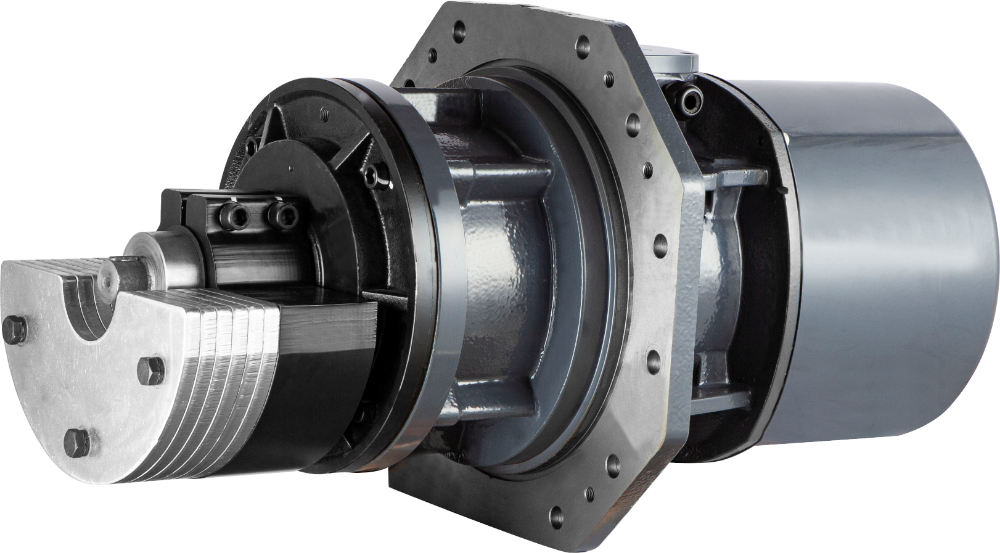
Walk into any factory showroom and you'll be handed a glossy catalog full of polished specs and ambitious promises. But the real story of what a machine can do isn't printed on those pages—it's hiding in the test bay, where engineers push prototypes to their breaking points and measure every deviation from ideal. A catalog tells you what the manufacturer hopes to achieve; a test bay tells you what they've actually verified under load, vibration, and time.
The difference becomes glaring when you compare two machines with identical data sheets. One was validated through a handful of simulated runs broadcast to a marketing team. The other spent weeks bolted to a concrete pad, cycling through worst-case torque profiles while sensors logged thermal drift and bearing wear. Only the second one will have a fatigue curve you can trust when your production line depends on 20-hour shifts.
That's why seasoned buyers ask to see the test bay before they ask for a quote. They want to know if the manufacturer still tests every unit before it ships, or if that rigorous process quietly stopped after the first few batches. A catalog can be rewritten overnight, but a test bay's accumulated data, custom fixtures, and battle-scarred technicians can't be faked. In the end, it's the difference between buying a specification and buying a guarantee.
Voltage Tolerance and Your Local Grid: The Overlooked Pair
Datasheets list voltage tolerance as a neat range, like ±10%, but that figure doesn't mean much until you see what your wall outlet actually delivers. Many assume the grid is a rock-steady 120V or 230V, yet local conditions—long distribution lines, heavy motor starts, rooftop solar backfeed—can push voltage far outside nominal. The result: equipment stressed or misbehaving even though it "meets spec."
The overlooked part is matching your device's tolerance to the real swing, not the label on the panel. A suburban neighborhood with aging transformers might dip to 108V on summer afternoons, while an industrial park with large VFDs can spike to 253V after hours. If your gear allows only ±5%, those events become silent killers: flickering LEDs, overheated power supplies, nuisance tripping.
Instead of assuming compliance, grab a logging meter or ask your utility for voltage data. Compare the recorded highs and lows against the tolerance band for each critical load. Sometimes the fix is as simple as a tap change on a transformer or a voltage regulator at the equipment—cheap insurance compared to unexplained downtime.
Freight Damage Is a Design Problem, Not a Shipping One
When a shipment arrives dented, cracked, or crushed, the reflex is to blame the carrier. But look closer at the box, the cushioning, the way the product was secured inside — and the real culprit often sits in the CAD file, not the delivery truck. Freight damage is rarely a random act of careless handling; it is a predictable outcome of design decisions made months earlier. The distance a parcel travels, the number of transfers, the weight stacked on top — none of that changes if the product itself is not engineered to survive its own journey.
Consider the difference between a product that breaks because a corner was left unprotected versus one that breaks because the entire structure failed under compression. The first is a packaging oversight; the second is a design flaw. Too many teams treat packaging as an afterthought — a cardboard shell wrapped around a finished object. But the object and its packaging form one system. The shape of the product determines how force travels through the box. The placement of internal ribs determines where stress concentrates. If the design does not account for drop orientation, vibration resonance, or stacking loads, no amount of bubble wrap will save it.
The fix starts at the drawing board. Instead of asking “How do we ship this fragile thing?” ask “How do we design something that can be shipped?” That means running virtual drop tests before the first prototype, choosing geometries that distribute impact, and integrating protective features into the product itself — a thicker flange here, a recessed connector there. It also means treating the packaging engineer as a design partner, not a downstream vendor. When freight damage drops, it is not because shippers became gentler. It is because the product stopped inviting damage in the first place.
Spare Parts and the Three-Year Question
Spare parts seem straightforward until you hit that three-year mark. Most warranties expire around then, and suddenly every worn belt or leaking seal becomes your problem. The real question isn't whether a part will fail, but whether the replacement will cost more than the machine is worth at that point.
That three-year window changes how you think about inventory. A compressor that ran flawlessly for 36 months might eat through three capacitors in the next year. Smart operators don't wait for the breakdown; they track failure patterns and stock the small stuff before it becomes an emergency. The difference between a two-day shutdown and a two-hour fix often comes down to a $12 part sitting on a shelf.
What trips people up is assuming all spare parts age the same way. Rubber hoses crack, electronic boards corrode, but a cast-iron housing will outlast the machine itself. The three-year question forces you to separate consumables from durables, and that distinction changes your budget. Buy the cheap parts in bulk, keep one expensive component on hand, and stop treating every repair like a surprise.
What a Real After-Sales Engineer Will Ask You First
When you finally get through to a real person on the support line, their first few questions aren’t random—they’re trying to narrow down whether this is something they’ve seen a hundred times before or a genuinely new failure. They won’t ask for your order number right away. Instead, you’ll hear things like “What’s the exact model number on the back panel?” and “Walk me through what you were doing just before it stopped.”
A seasoned after-sales engineer also asks about the environment: room temperature, recent power fluctuations, whether you’ve moved the machine recently. These aren’t polite small talk. A loose cable from a recent relocation causes half the “dead unit” calls. They’ll also want to know if the error is intermittent or constant, and whether other devices on the same circuit are acting up. The faster you answer these without getting defensive, the quicker they can rule out the simple stuff.
The best question they ask, though, is often the one you didn’t expect: “Has anyone else tried to fix it before you called us?” That single line reveals more than any diagnostic log. It tells them whether they’re dealing with the original fault or a second, self-inflicted one from a well-meaning but clumsy attempt. So before you dial support, grab the model number, note the exact symptoms, and be ready to admit if you poked around inside.
FAQ
Look beyond the product photos. Request a recent test report or a short video of the motor running under load. A trustworthy exporter will also share details about their winding insulation class and bearing brand without hesitation.
Not necessarily. Voltage is only part of the equation. You need to confirm the frequency, as a 60Hz motor will run faster and hotter on 50Hz. Also check if the motor is designed for your specific ambient temperature range.
Ask for the certificate number and verify it directly with the issuing body. Many exporters list CE marks without proper documentation. A better approach is to request a copy of the motor's technical file or a recent third-party test certificate.
Vague answers about lead time, reluctance to provide a sample, or quoting a price far below market average. Also watch out for suppliers who cannot explain the difference between vibration force and rotational speed.
Starting with a standard model reduces risk. If you need custom changes, ask for a written confirmation of the modifications and request a pilot run before mass production. This helps you catch mismatches early without losing the full order value.
Break down each quote into base motor price, packaging, freight, and any certification or inspection fees. Then compare the motor's rated power, amplitude, and bearing type. A low price often hides a smaller motor frame or lower-grade insulation.
Avoid 100% upfront payment. Try to negotiate 30% deposit with the balance against a copy of shipping documents. If the exporter insists on full payment before production, that is a strong warning sign, especially for a new buyer.
Use a third-party inspection service before shipment. Give the inspector a detailed checklist including voltage, frequency, paint thickness, and vibration amplitude test results. A reliable exporter will welcome this step.
Conclusion
Global buyers evaluating 380V vibrator motor suppliers should look beyond glossy catalogues and focus on evidence from the production floor. Request winding insulation test reports before placing an order, because insulation breakdown is the leading cause of premature failure in high-vibration environments. A factory's test bay tells you more than any datasheet: ask to see motors run under load for extended periods, with thermal imaging and vibration logging that reflect real operating conditions. Equally important is voltage tolerance. Many grids fluctuate well beyond nominal 380V, and a motor that cannot handle sustained over- or under-voltage will burn out quickly. Insist on documented performance across your specific tolerance band, not just a single test point.
Freight damage should be designed out, not blamed on the carrier. Look for exporters who use rigid internal bracing, reinforced terminal boxes, and shock-absorbing packaging tailored to vibrator motors. Then think three years ahead: confirm that spare parts such as bearings, eccentric weights, and end shields will remain in stock, and ask how quickly they can ship after your order. A genuine after-sales engineer will first ask about your application details—material being conveyed, duty cycle, ambient temperature, and mounting angle—before recommending adjustments. If the supplier only quotes price and delivery date without these questions, treat that as a warning sign.
Contact Us
Contact Person: ZHUO
Email: [email protected]
Tel/WhatsApp: 86-576-86320988
Website: https://www.cnguangling.com