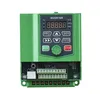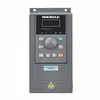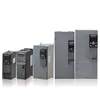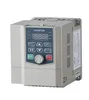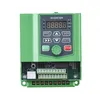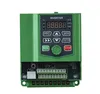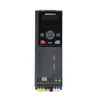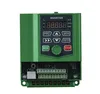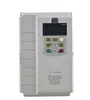
Variable frequency power supply
Variable Frequency Power Supply: The Ultimate Solution for Precision Power Control
Variable frequency power supplies have revolutionized industries that require precise power management and frequency control. These advanced systems enable users to adjust voltage and frequency parameters according to specific application requirements, making them indispensable in testing laboratories, manufacturing facilities, and research institutions.
Key Features of Our Variable Frequency Power Supply
- Wide frequency adjustment range: 15Hz to 2000Hz
- High-precision voltage regulation with ±0.5% stability
- Multiple phase options including single-phase and three-phase models
- Advanced DSP control technology for superior waveform quality
- Compact design with robust construction for industrial environments
Technical Specifications
| Parameter | Specification |
|---|---|
| Input Voltage | 1-phase: 110V/220V ±10%, 3-phase: 380V ±10% |
| Output Voltage | 0-300V (adjustable), 0-500V (adjustable) |
| Frequency Range | 15Hz-2000Hz (continuously adjustable) |
| Frequency Stability | ±0.01% (after warm-up) |
| Waveform Distortion | <5% (THD) |
| Load Regulation | ±1% (no load to full load) |
| Efficiency | >90% (typical) |
Variable Frequency Power Supply FAQ
Q: What safety features are included in your variable frequency power supply?
A: Our variable frequency power supply incorporates multiple safety mechanisms including over-voltage protection, over-current protection, short-circuit protection, and over-temperature protection. The system automatically shuts down when abnormal conditions are detected and provides clear fault indications. All outputs are isolated from the input for enhanced safety.
Q: How does a variable frequency power supply differ from a standard power supply?
A: Unlike standard power supplies that provide fixed-frequency output, a variable frequency power supply allows precise adjustment of output frequency to meet specific testing or operational requirements. This capability is crucial for applications like motor testing, aerospace equipment validation, and power electronics development where different frequency conditions must be simulated.
Q: What industries typically use variable frequency power supplies?
A: Variable frequency power supplies are widely used in aerospace (for testing aircraft components), manufacturing (for motor and transformer testing), renewable energy (for inverter testing), and research laboratories. They're also essential in automotive testing, defense applications, and power quality analysis.
Advanced Applications
Modern variable frequency power supplies support sophisticated applications including:
- Power amplifier testing under varying frequency conditions
- Simulation of grid instability for renewable energy systems
- Precision testing of frequency-dependent components
- EMC/EMI testing with controlled power conditions
- Motor efficiency analysis across different operating frequencies
Model Comparison Table
| Model | Power Range | Max Voltage | Frequency Range | Phase |
|---|---|---|---|---|
| VFPS-1000 | 1kVA | 300V | 15Hz-500Hz | Single |
| VFPS-3000 | 3kVA | 500V | 15Hz-1000Hz | Single/Three |
| VFPS-5000 | 5kVA | 500V | 15Hz-2000Hz | Three |
| VFPS-10000 | 10kVA | 500V | 15Hz-2000Hz | Three |
Installation and Operation
Our variable frequency power supply systems are designed for straightforward installation and operation:
- Connect to appropriate input power source (verify voltage matches specifications)
- Connect output terminals to your test equipment or device under test
- Power on the unit and allow brief warm-up period
- Set desired output parameters using the intuitive control interface
- Monitor output parameters through the digital display or remote interface
Maintenance Guidelines
| Maintenance Task | Frequency | Procedure |
|---|---|---|
| Cooling System Check | Quarterly | Inspect fans and vents, clean as needed |
| Connection Tightness | Biannually | Verify all terminal connections are secure |
| Calibration Verification | Annually | Check voltage and frequency accuracy |
| Internal Inspection | Every 2 Years | Professional inspection of internal components |